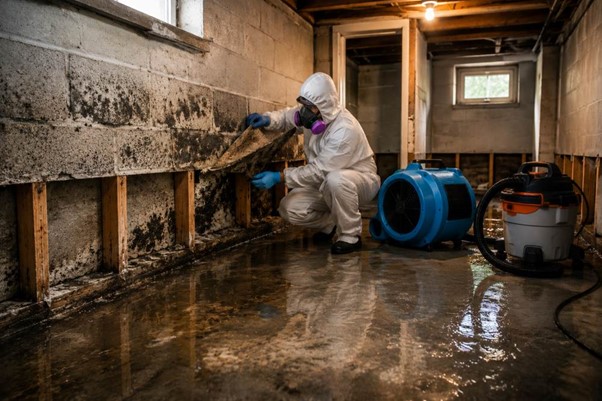
Basements have a reputation for being damp. A lot of homeowners have simply accepted that as part of life, especially in older homes. A little moisture in the corner. A smell that comes and goes. A floor that seems slightly wet after big rainstorms. These things get normalized over time when they never get addressed. But moisture in a basement is not something that stays the same. It either gets fixed or it gets worse. And the direction it takes is almost entirely determined by whether anyone decides to take it seriously.
What Proper Basement Cleanup Actually Involves
When a basement experiences repeated or significant flooding, the cleanup process goes much deeper than removing the water and wiping down the floors. Water saturates the surrounding concrete and block walls. It soaks into any wood framing at the base of walls. It gets into storage items, under rugs, behind stored equipment, and into every porous material it can reach. Thorough flooded basement cleanup means following the water wherever it actually went, not just addressing what is visible on the surface. It means pulling materials that cannot be effectively dried. It means treating the floor and walls, not just drying them. And it means understanding how water got in before sealing everything back up so the same scenario does not repeat itself three months from now.
What Keeps Happening When the Moisture Never Leaves
The thing about moisture in a basement that never fully dries is that it creates a permanent invitation for problems to grow. Wood framing softens over time. Concrete continues to absorb and release moisture in cycles that weaken it gradually. And in the dark, enclosed environment of a basement with limited airflow, biological growth finds everything it needs to establish itself and spread. This process can be happening for months or even years before it becomes obviously visible. By the time you see discoloration on the wall or smell something that sends up a red flag, the situation has usually been developing quietly for a long time.
When Growth Becomes the Problem That Needs Its Own Solution
Once mold has taken hold in a basement environment, it does not resolve on its own. It spreads to adjacent materials. It releases spores into the air that the rest of the home circulates through every time the HVAC system runs. And because basements are part of the building envelope, air that carries those particles finds its way upstairs regardless of whether the basement door stays closed. Professional mold remediation is not the same as wiping down visible growth with a household cleaner. It means identifying the full extent of the affected area, removing compromised materials, treating the environment, and verifying that the conditions that supported the growth have been corrected at the source.
The Simple Habits That Change Everything Going Forward
Preventing basement moisture problems from repeating comes down to consistency rather than complexity. Control the humidity level in your basement with a quality dehumidifier. Make sure any sump pump is tested and functional before each rainy season. Inspect foundation walls at least twice a year for any new cracks or changes in existing ones. Keep the area around your home graded so water drains away from the foundation rather than toward it. And after every significant rain event, walk through the basement to see if anything looks or feels different. These habits require a small investment of time but they fundamentally change the trajectory of how your basement holds up over the years.


Comments are closed.